The 7 Mega Trends of the Sovereign Era

Listen to Steve read this post below (15m audio)


Navigating the shift from From Global Markets to National Fortresses

Fortunes are made because they usually require big investment, the building out of infrastructure, and shifts in the geopolitical landscape. Fortunes are lost because of incumbents ignore these shifts because they take so long. During the build-out, bubbles often burst, allowing yesterday’s heroes to say, “I told you so…” before they eventually get usurped. Big Media missing the internet is still the best example.

The second most common question I get asked after a keynote is about big trends. And with that in mind, here are my top 7 big shifts—the shifts we’ve all got time to navigate around to adapt or start something new and big.

1. Deglobalisation

The era of hyper-globalisation is over. We’ve had three recent hits to remind us of the risks that come with the global marketplace. First Covid, then Trump’s Liberation Day Tariffs, and even the most recent war in Iran. The days of free trade are quickly being replaced with national-first focused policies. This doesn’t mean we’ll stop trading globally; rather, that global trade will retract. And it already is.

In the 1990s and early 2000s, global trade typically grew twice as fast as global GDP. In 2026, the WTO projects trade will grow by only 1.9%, while GDP is expected to grow by 2.8%. Global merchandise trade (the sum of world exports and imports) is now 44.8% of global GDP, down from its all-time high of 53.3% just over a decade ago. Remember, these shifts take decades. The good news is that this gives us time to recalibrate around them.

2. Re-shoring

We are moving from a “just in time” to “just in case” Economy. Manufacturing will return to high-cost labour markets. While Covid showed us the risks of international reliance, AI and robotics are about to remove the advantage developing markets currently have in manufacturing goods.

In the 1990s, the West literally taught China how to manufacture quality at scale. It was done via joint ventures from the promise of lower-cost goods to sell in home markets. Fast forward 25 years, and China has now surpassed the West in all forms of manufacturing. But the most important of these is humanoid robots. I’ve written about them before here, and I believe this shift is bigger than informational AI. I call it Physical AI—where we put brains into machines, especially human-shaped ones.

We quite literally need humanoid robots for two reasons. One, we don’t have enough humans; our global population has now turned the corner into decline based on global birth rates per female. Two, we have a human-shaped world. Houses, hospitals, and retail environments need flexible, dextrous robots who can do a task the first time they’ve seen it or literally had it explained to them. That’s coming quicker than we think. Expect to have humanoid robots which follow verbal and visual instructions with a PhD in every subject for around $30,000 by 2030. Yes, you’ll own one. And when this happens, we’ll get China’s robots to help make our robots and reverse what China did to the West, using their technology and processes to reinvent ours.

3. AI as Infrastructure

AI is no longer a feature, but a foundational utility of the 21st century. There are a lot of clues around this idea because at the same time we hear about huge amounts of investment (up to $7 trillion globally by 2030), we are also hearing rumblings about whether this will ever get a return on investment and people not wanting it built near where they live (all the while using Generative AI a zillion times a day). This is what has happened every time we’ve had large infrastructure shifts since industrialisation.

As of today, the investment in AI now rivals investment in roads and power grids. The US Interstate Highway System took 35 years to complete at an average annual cost of $18.8 billion; the AI data center build-out is currently spending that same annual sum every 5 weeks. It raises important questions about corporate power and ownership of the major factors of production. AI falls into that category and shouldn’t be in private hands. Smart countries will remove it from private operators, just like we did with the electricity grid in the Gilded Age.

4. Data is Energy

Big Tech is pivoting to becoming global energy titans; they have to in order to sustain the massive power requirements of AI. Google, Microsoft, and Amazon are securing their “compute” future by investing heavily in nuclear power, ranging from small modular reactors to reviving dormant plants like Three Mile Island. This shift blurs the line between information and physical energy, as AI data centers—already consuming 5% of the U.S. power supply—are projected to triple their demand by 2030.

This “Big Energy” move serves as a strategic “Monopoly 2.0” that allows tech giants to expand while avoiding antitrust scrutiny. By applying the Amazon Web Services (AWS) model to the power grid, these firms will generate excess carbon-free energy and sell it back to consumers, potentially displacing traditional utility and oil firms. This consolidation of AI, information, and infrastructure grants Big Tech a level of influence that rivals nation-states, positioning them as the new global colonizers of the 21st century.

5. The Conglomerate Comeback

There’s a reason Big Tech is doing so well in the share market. They remembered it is better to own than rent. And so, whenever they can, they use their excess funds to build or acquire the resources they need to expand. Outsourcing creates global shock risk. Building a giant supply chain in-house now fits with the emergent market dynamics listed above.

Take Amazon, for example: it didn’t outsource its supply chain—it bought every layer of it, then opened each layer up as a paid service to competitors. AWS was the template. Amazon owns 110+ cargo jets, 175,000 delivery vehicles, 1 million+ warehouse robots (via the Kiva acquisition), 185+ fulfilment centers, its own nuclear power plant, 450 satellites in orbit, and 500+ Whole Foods stores. This pattern is also evident in most of what Musk is doing, as well as Google. The most powerful companies of yesteryear did this too: in the 1920s, Henry Ford built a massive, pre-fabricated industrial town in the Amazon rainforest to secure a direct source of rubber for car tires. During the peak of globalisation, companies moved to focus on singular core businesses. That’s now in reverse.

6. Inequality as Policy

I’ll start with this: the world’s 12 richest billionaires now own more wealth than the bottom half of humanity (more than 4 billion people). It’s worse in the USA. Elon Musk has more wealth than the bottom 51% of the entire nation. The Gini coefficient is how economists measure inequality: zero indicates everyone has exactly the same wealth; a score of 1.0 means one person owns everything. The US is above 0.8 and in Australia, it is 0.61. It’s not your imagination—wealth is accumulating at the top. It’s why our economy lives in the extremes: people with 10 houses and people who can’t afford a house—or as I like to call it, the Tiffany’s and Costco Economy.

We can expect the government to start responding heavily with wealth taxes in addition to income taxes. They have to—otherwise, it will end in war, famine, or revolution; it always has. In Australia tomorrow, the new budget will be released with policies that hit inequality around investment properties and capital accumulation. But what we really need is a courageous government to go hard on corporate tax avoidance (easy to fix actually, just tax them on 5% of revenue), billionaires, and resources taxes. Even the CEO’s I work with of large public corporations agree who they work for should pay more tax – we all do.

I think and hope they are starting to get the message that they should chase the top end of town, not everyone somewhere in the middle trying to get ahead and secure a dignified retirement. The middle class was a great post-WWII invention and one that is worth maintaining. Globally, 74% of millionaires actually agree with increasing wealth taxes, as do I. Billionaires would do well to think the same way (be less greedy) if they want to remain at the top of the tree.

7. Re-nationalisation of Infrastructure

Smart governments are taking back the keys to essential services in the name of national security and resilience. The UK launched Great British Energy in 2025 with £8.3 billion in public capital to drive the clean-power transition. In France, the full nationalisation of EDF has allowed the government to cap energy prices and commit €72.8 billion to new nuclear reactors—the kind of long-term, nation-scale investment private markets were unwilling to make.

In Australia, it is mostly just rumblings—but a huge majority of voters want higher taxes on our fossil fuels, and public infrastructure back in the hands of “the public.” Simply because the jury is in: our services are now often worse and somehow cost more. Australia’s privatized services have evolved into a mandatory cost-of-living tax, with utility price increases consistently outstripping inflation. Electricity leads the surge with a 20% price hike following the “rebate cliff,” with electricity bills nearly five times the rate of inflation. The Transurban Tax evolves from a terrible deal where the government allows a fixed 4.25% escalation in prices per year. Meanwhile, corporatized water utilities have resulted in water prices doubling the inflation rate over the past decade. People are sick of it.

Now that people are aware of the heist, smart governments (let’s hope we get one) will claw back essential services, probably in a 51/49 private deal, so they can manage the cost of living and infrastructure investment, and provide employment and training enclaves.

Share

– – –

Keep Thinking,

Steve.


** Get me in to do a keynoteat your next event and as a blog reader – get 2 nights free at my luxury farmhouse on the Bellarine Peninsula.

Mega Trends – COVID-19 series

This week you can watch my blog for 5 mins instead of reading it! In the first episode of #SteveFeed – Protein for the mind, I explore the #5 Mega Trends emerging from a Post Covid Economy. The five things every business, brand and individual needs to be aware of as we attempt to navigate our way out of this crisis.

In summary the trends are:

  1. Digital Sovereignty 
  2. Automation At Distance
  3. De-globalisation
  4. Essentialism
  5. Market Recalibration

Some ideas I’ve touched on in recent posts. I’d love for you to make a comment on Youtube and even subscribe to my YT channel here. Join another 10,000 peeps on the Sammatron wagon – safety in numbers I say. Get on it!

– – –

Keep thinking,

Steve. 

Houses of the Future – COVID-19 series

If you’re like me, you’re probably thrilled to start seeing something other than the four walls of your own home. The Covid-19 crisis will be a long overdue start to influencing changes to the buildings we spend our time in.

The Merger – Now that information work has finally reached its mobility phase, houses and offices will start to change shape. The major change is that spaces for work and living will start to replicate each other, with differences in size and scale. We can already see it in the home. Technology that used to solely reside in offices has begun to spring up in our homes. The technology we now have in the home is usually as good and often better than what we have at work. Offices are starting to look less like cubicle farms with the arrival of lounge spaces, entertainment zones, eating areas – somewhat replicating what we see in boutique hotels. What’s ironic is that this is how things used to be pre-industrialisation. We lived where we worked. Craftsmen had workshops out the back of houses. Bakers lived on top of their shop front. Now that many of us are becoming modern day digital craftspeople, we are going back to that model.

The first part of the process was the delineation of working and leisure hours evaporated. Now it’s about to happen to our spaces and they’re starting to replicate each other.

Caves with Widgets – We’ve been living in caves for a very long time, albeit these days they come with modern day comforts. It is valuable to remind ourselves of how we got to now by looking at how long some of the current technologies in our homes have been around:

  • Letterboxes – Mail services started encouraging their installation in houses for deliveries in the mid-1800s.
  • Indoor plumbing – In the 1860s, only 5% of American houses had running water. Flush toilets were still uncommon until the mid 1900s.
  • Driveways – Only became a standard inclusion fewer than 80 years old ago.
  • Electricity – Uncommon in suburban homes until the 1930s.
  • White goods (electricity needed) – Rare in modern economies until post WWII.
  • Televisions – In 1956 in Australia
  • VCRs – Early 1980s
  • Home Computers – Mid-1980s
  • Internet – Mid-1990s

So what’s coming?

Zero Energy Buildings: The ZEB movement is a system where a building generates all of the energy it requires. In the near future, the walls and roof of every new or retrofitted building will be capable of generating power. This will be primarily through solar and micro wind turbines, as well as piezoelectric technology that converts kinetic energy generated by raindrops hitting a building to electricity – yes, this already exists. The energy rating of buildings in the future won’t just be about efficient use of energy – it will be about creating an excess, more than it needs. It will become the new normal.

Houses that Change Shape: Walls will be moveable in most apartments to maximise space usage across different hours of the day, like hotels often do in its meeting spaces. They’ll become modular. Houses of the future will be designed with non-permanent room sizes, allowing us to get more from less. Kitchens and eating spaces will be able to expand and converted back into lounge rooms or even cinema rooms.

Delivery Boxes Replace Letterboxes: The letterbox is sorely in need of an upgrade. Our houses now are the recipients of packages, not letters. You’d think e-commerce hadn’t happened yet! In the future, letterboxes will have three sections: dry, fridge and frozen, so it could take all kinds of deliveries. Letterboxes will likely be as big as a fridge and possibly underground, with a button for the courier to press, so it could rise up to take the delivery. When a delivery arrives, the recipient is notified and can view live video footage, to verify the delivery person’s identity. Using a smartphone, the recipient could open the delivery unit and check that the delivery is as ordered, using near field communication readers (RFID) and image recognition cameras. The delivery unit would be secure as a safe for delivery of high value items and be powered under a ZEB doctrine.

Upgraded Home Office and Virtual Reality Room: We can expect the home office to receive a massive upgrade. High-end home offices will be as common as gourmet kitchens, given their importance in generating income for many households. We’ll have virtual reality meeting rooms with travelator floors to make us feel that we are in the same room as someone else on the other side of the world. These spaces will lead us to question why we need to go to the office at all. These video studios will be capable of creating content to make even the most advanced YouTuber salivate. We’ll also use our VR rig, including haptic gloves and suits, to shop online for things we want to touch and experience before purchasing. We’ll also use it to exercise and browse holiday accommodation and experiences, using a treadmill to keep us stationary while we seemingly explore other places.

A.I. Enabled: Automation utilising voice and gesturing will replace traditional interactions and buttons to manage re-ordering of household items. We’ll literally be talking to the walls! This is a battleground Amazon, Google and Apple are already deeply ensconced in. Convenience will be high, but privacy and security concerns will need to be overcome for mass adoption.

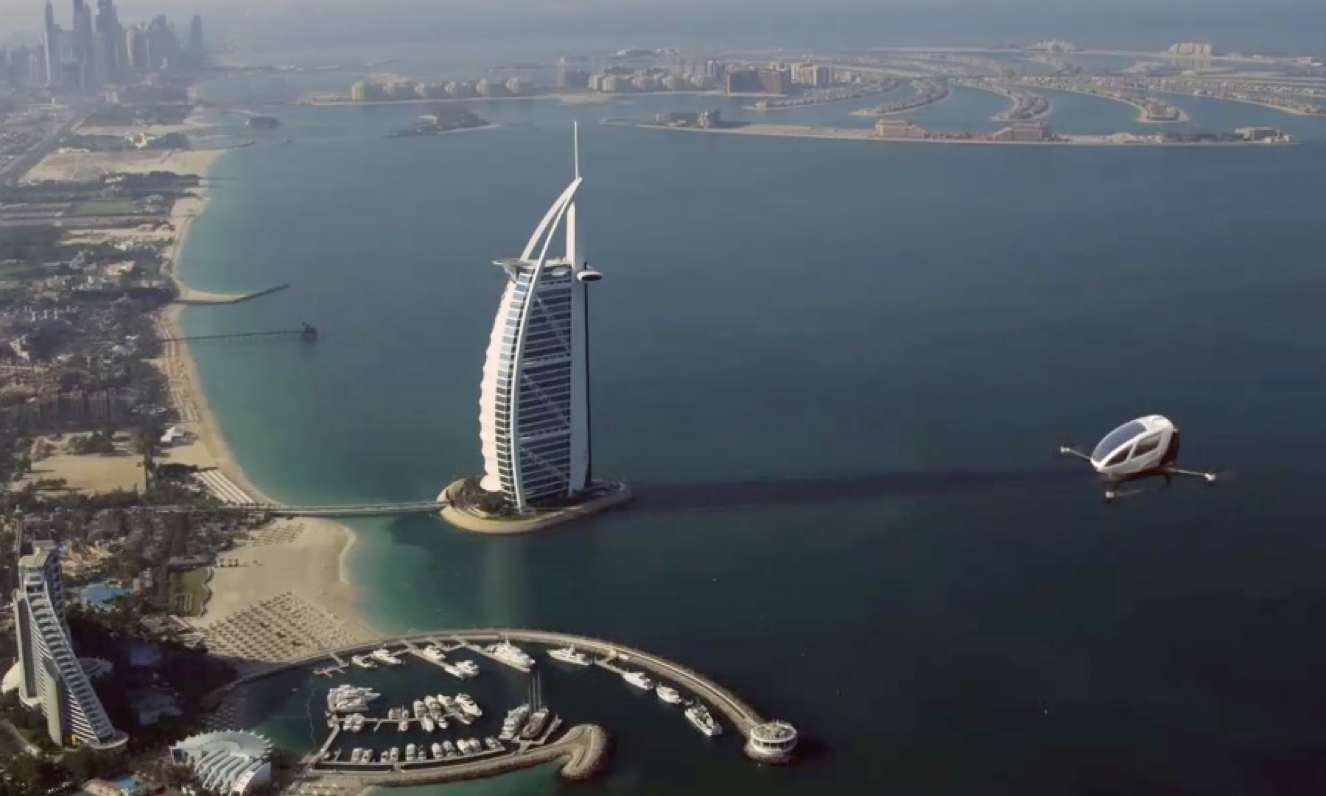
Drone delivery and landing pads: Our growing parcel deliveries need to land somewhere. Apartment buildings are already being designed with landing pads on rooftops and your house will be no different. Maybe it will have an automatic opening lid that closes over after the drop off has been made or the package might go straight into a delivery box. We can also expect new houses to have rooftop landing pads for Vertical Take Off and Landing (VTOL) vehicles that will become common within 20 years. In fact, ‘flying cars’ have a high probability of beating autonomous vehicles to deep market penetration, given they don’t have to work around existing infrastructure and pedestrian safety issues.

Smart Toilet: I’ve written about this before. We can expect it to be our health partner in life and since Alphabet had a patent approved on the smart bathroom last year, this is one of those realities which will surprise with its speed of arrival.

Smart shower: One that takes a photo of you every day… not to invade your privacy, but to ensure it knows you have a dangerous sun spot long before you do.

Glass = Screen: If you’ve always wanted a house with a view, it’s about to become a lot cheaper than anyone expects. All the glass in our homes will become web-enabled screens. The resolution of our windows will be indistinguishable from an actual view into the real world. All of a sudden, anyone can have a real-time harbour view that changes perspective on different windows in the house to deliver a very lifelike experience. Maybe owners of actual harbour mansions will monetise their views via a live feed cam? Or maybe nimble entrepreneurs can set up HD webcams in places of great beauty? Live feeds of idyllic vineyards in the Loire Valley, anyone?

Charging Stations in All Driveways: Our driving future is all electric, as is our entire economy. Expect that every place cars stop will have a charging facility on hand. If they ever stop – I’ll probably send mine out to work for me when I’m not using it.

So, if you are wondering how buildings will change, wonder no more. The exciting part is that there’s many more changes we could add to this list. In a changing world, this is where tomorrow’s jobs and industries will emerge. The opportunities created are equal for existing companies and startups. The technology for all of these ideas already exists. It’s not a question of if – it’s a matter of who and when.

I had a fun radio interview on this topic you can listen to here.

– – –

Keep thinking.

Steve. 

The Biggest Tech Trend for 2020

The biggest tech trend in 2020 won’t be a new widget or a shiny piece of glass. It will be one of the oldest technologies from civilised society: governance.

One of our species’ oldest and most important technologies is language itself. Our ability to write and document knowledge is what puts us on top of the food chain. Part of the documentation process is the rules, regulations and boundaries we use to govern the market place. 2020 will be the year we remember for how we ‘civilised’ the technology we all love so much.

In the past 20 years we have metaphorically discovered fire. The internet has become a tool which is so vital for mere economic participation, that no one dared asked if we should be careful about its consequences. But this fire has got a little out of control recently. While we want its heat, we need to make sure we don’t all get burned in the long run. Fire can keep our houses warm, cook our food and power a combustion engine, but it can also burn down a city if we don’t build in thoughtful safeguards.

Finally activists and governments are starting to take notice. Next year we’ll see actions which will make the GDPR look like child’s play. We can expect a number of market changing actions to commence. Things like antitrust action, algorithmic regulation, digital advertising standards, tax on data holdings, bans on data surveillance, outlawing of facial recognition and social media content standards, to name a few. Ironically, this will be a huge challenge for the disrupters themselves, as they have built entire business models around this largely unregulated territory. When it comes to tech, the ‘EPA’ is about to arrive to take a good close look at how they’ve been polluting our society with their data economy externalities.

So will there be any big tech shifts in 2020? Of course, they’ll keep coming thick and fast: digital twins, mesh architecture, hyper automation, human augmentation,  bio-tech interfaces, and autonomous things. But next year, the big issue will be the management of the political, social and economic consequences of the exponential technology in businesses.

Good news:

Tommy McCubbin and I have developed a new session we call 2020 Vision.

A year in review – A year in preview.

In this session, we review 2019 and preview 2020 by looking at what happened, what it means and what’s next. Many of the insights will surprise even the most agile of technology observers. The entire thing is presented in GIFs – yep, you read that right. It’s a fun session to end the year with your team, and sew the seeds of the thinking needed to thrive in 2020. We only have 6 slots available and I expect them to be gone by Monday.

If your team is up for it, hit me back with reply email and get ready to have your mind blown.

Steve.

Top 10 tech trends for 2019

Last week was what piqued my interest in 2018 – and here’s 10 things I will be looking out for in 2019. Of course predictions are a tough business, especially when they’re about the future!

  1. Algorithms as ingredients: Seventy years ago we didn’t know what was inside our packaged foods. Likewise, few of us understand what algorithms are, and more importantly what’s inside them. So let me be very clear here – They are more dangerous than food with bad ingredients because we don’t have natural reflexes like taste buds and sense of smell to warn us about the bad ones. They infiltrate the mind by stealth. I predict this year we’ll see the first regulation where algorithms must be communicated with end users of digital products – like we have an ingredients list and nutrition panels on boxes of cereal. The black box is about to be opened up. I’m certain many will be horrified by how it’s decided what we see and consume on line.
  2. Big Tech Anti-Trust Action: I expect the first Anti-Monopoly case this year against a big technology firm. The most likely candidate is Facebook. Even though Amazon and Google are just as predatory in their behaviour, Facebook has made the most errors in handling their power. In the end, it’s humans that decide who to fight and perception matters more than reality. This is why Zuckerberg better get ready for another tough year in 2019. His services will might be blocked in a country or two, but I expect some US law makers to propose a split of What’s App, Instagram and Facebook. It’s overdue.
  3. Social Back Channels Emerge: Robin Dunbar proved many years ago we physically can’t manage close relationships with more than around 50 people, and wider relationships with more than around 150 people. This is why social media doesn’t really work for us. It’s not social, it’s just broadcasting for the masses. I only use it to share my work for those who are interested in it. Real relationships are something I do in the back channels: Texts, Private Messages, Small groups, DM’s. I’d imagine you’re already doing this and it will only increase to the chagrin of social media forums which harvest attention for revenue. In 2019 I expect traffic declines in public social media and actual social conversations to be in back channels and in person. So let’s just be honest here and admit that everything else we see on social media is really just ‘advertising‘.
  4. Buttons go missing: As voice AI’s like Alexa, Siri, Cortana and Google get exponentially better – then we can expect these API’s to be opened up and embedded into white goods and all manner of electrical devices in our homes. At the CES next week – smart white goods, ones we command via voice, will make a bigger than usual play. We already saw the start of this with the Amazon Basics Microwave which has Alexa built in. Buttons will go the way of dials and disappear as devices listen to our instructions. (Which will help big tech invade us further – see 1 & 2).
  5. Electric Mobility: Scooters, skateboards and other small electric transport devices will pop up in cities around the world very quickly and provide an entree into electric mobility. An infrastructure will pop up around it to support the shift, essentially teaching consumers about the upside of electric mobility versus combustion engines. A trip in Shanghai, China is a great example of the shift to electric – 90% of motorbikes on the road are already electric there.
  6. The last 10 Steps: Will becomes the e-commerce go to phrase of the year. I wrote about it here a few weeks ago.
  7. Blockchain evaporates: Funding around Blockchain and Crypto projects will decline markedly. This will allow the true believers (me included) to get back to work on product in a non-speculative environment. We may even witness a Blockchain based service which is useful, and consumer friendly. In all probability food supply will be documented on a blockchain as the first commercial use. Walmart have stated it will be mandatory for suppliers in 2019.
  8. 5G Flow on: The impact of 5G isn’t faster downloads to watch youtube videos on the train – it’s all about new possibilities. With speeds up to 100 times faster than what we are used it will facilitate low latency, quasi-real time augmented interactions in our world. The big winner here will be automotive. We’ll see new models of cars come with more augmented features – interactive real world head up display advice, and move us closer to autonomy which requires faster connectivity. It will also facilitate changes in education and possibly ‘geographically displaced’ surgery.
  9. Personal Robotics gets real: Now that voice AI is very good indeed, I’d expect to see the first consumer facing ‘domestic robot’ hit the market at affordable prices this year. Some type of mobile humanoid robot which offers mechanical capabilities around the home. Think lifting, carrying, sweeping.
  10. AI Job stealing fears moderate: Expect a flip where articles start talking up how AI will create more jobs than it removes. The naysayers will realise humans have a never ending list of things which need done. Even with machine learning robots need to be taught, and are better at efficiency – what we really want from each other is nuance and humanity – which requires humans.

—

Make a splash in 2019, Steve.

My Top 10 for 2018

I was thinking about some of the cool things I saw, read, noticed and digested around the world of tech for 2018. A bonus blog post for your holiday perusal.

You’ll notice underlying the top 10 is what I regard to be the biggest shift in tech at the moment is the realisation that we have a technology wildfire raging. We need to learn to control it and ensure that what we are building serves the many, and not just the few. We can do it – but first we must understand it.

So here it is, the Sammatron’s Tech Top 10 for 2018…. enjoy:

  1. Blog Post of the year: Survival of the Richest by Douglas Rushkoff, who contends that the one percent are plotting to leave us behind. It’s a compelling read that unearths the dangers of the schism between us and the one percent.
  2. Podcast Series of the year: The Dream by Stitcher is a brilliant review of the history of Multi-Level Marketing (MLMs), pyramid selling and their total dodginess. Think Amway. The thing I found most compelling is how hackable the human mind can be when an organisation is selling ‘hope’ instead of an actual product. The ironic thing about these MLMs is that the philosophy they sell is all true (in relation to business success), but the business model they attach to it is a total fraud. And that is their trick. A mind blowing story that is very well researched.
  3. Podcast Episode of the year: Joe Rogan’s interview of Dr Ben Goertzel. Dr Ben Goertzel is a mathematician and leading Artificial Intelligence researcher. They go deep on everything that matters on tech and our future. Ben might just be the most informed, intellectual, articulate, compassionate and humane individual I’ve ever had the pleasure of listening to. It’s two hours of wonder. The world is lucky to have people like Dr Goertzel in it.
  4. Book of the Year: Winner Takes All by Anand Giridharadas. The elite charade of changing the world. This book couldn’t come at a more important time in our history. It’s the one book I’m recommending at the moment. In this book Anand explains from the inside how the emergent global elite pretend to try to ‘change the world for the better’, but in doing so really just obfuscate their desire to preserve the status quo and their role in causing the problems they pretend to try and solve. Jaw-dropping stuff.
  5. Documentary of the Year: The Cleaners by Hans Block and Moritz Riesewick is a timely film which investigates the shadowy and disturbing world of content removal from popular social media sites. An ugly underbelly of outsourced, low-paid workers deciding on whether a beheading constitutes news, free speech or inappropriate content. Another reminder that these are not technology companies but media organisations that are long overdue some serious regulation.
  6. Software of the year: Well, it’s more a shift than a singular piece of software – the Low Code / No code app movement. This is the arrival of software platforms that allow anyone with basic computer literacy to develop software or apps without any coding expertise. Put simply, if you can read, you’re about to become a software developer too. An important evolution for the masses where software is eating everything
  7. Tech Fail of the year: Crypto currency price crash – Ok ok, this is actually good – it means we can now focus on the important technology which underpins it – Blockchain. I actually believe that this is a bit like the Dot Com crash in 1999-2000 and is almost a pre-condition for crypto and blockchain to be everything it can be. Yes, it will come back even stronger.
  8. TV Show of the Year: Black Mirror. In fact, it’s not even close – it’s Black Mirror and daylight. By far the most insightful and important TV series in decades. The most recent episode Bandersnatch just snuck into 2018 a few days ago. If you haven’t seen it, then do yourself a favour.
  9. Smartphone App of the year: Surprise….None, zero, zip. I can’t think of one, and I checked my phone too. None have been good enough in the past 2 years to even make it onto my device! Actually I lie, a new parking app in my city Melbourne called PayStay is quite useful, but it’s more a reflection of our city being 5 years behind the times than an innovation. It’s another reminder that the halcyon days of app development are over, and that the real game in the coming few years is beyond the app economy. It’s probably worth looking at your own phone – I’m certain you’ll also be underwhelmed about how little it’s changed in the past few years.
  10. Technology Shift of the Year: The move to Voice as a primary interface. It’s early days – but I believe it is under-hyped and will replace the screen as our primary interaction in years to come. Don’t forget, language is Humanity’s killer app. Best you get onto it now.

—

Have a great 2019, Steve.


The technology shifts you need to focus on in 2018

I’ve always believed the technology shifts we ought focus on shouldn’t be the abrupt, but changes in the tide of consumer behaviour and the economy. The reasons shifts are more important than definitive events is that we have time to react to them, build around the movement and benefit from the change. Disruptive events are all too often the story of yesterday. With that in mind, here’s some thought starters on where we might focus our businesses in the coming year.

Typing to talking: After investing 20 years in being found on the screen, a list, the list will start to evaporate and be replaced with a singular verbal response. There won’t be a first page, just a recommendation. With Google, Apple, Microsoft, Amazon and others investing heavily in voice activated devices the battle for the home, the fridge and entertainment devices will shift from typing to talking. This is a basic requirement before any serious IoT can be deployed, and will also forge a core component of the autonomous transport revolution. If any business relies on the SEO now, then it’s time to start working on Voice Engine strategy for a very fast approaching tomorrow.

Drone Logistics: While the big players have been the core promotors of drone possibilities, expect to see a pivot where a ‘Jo Nobody’ local business starts the process of real deliveries via drone. While regulations are moving fast, the risk for a small local outfit to deliver something just a few km’s away, while illegal, is often palatable to entrepreneurs. I expect V1 drone logistics to be built underneath the radar (surely you liked that pun). The first regular outside of line of sight deliveries will occur while no one is watching this year. Small efforts by micro businesses where both the deliverer and deliveree benefit. The real innovations are less about press releases of possible future innovation and more about two parties solving each others problems using the technology, mostly without permission.

Pop up bots: While bots pervade our every internet moment and make most of the technology we touch, we can expect bots to pop up where humans once stood this year. It won’t be a swarm, but we can expect to see a few humanoid style robots stand where people recently have, doing the repetitive task they did. At first it will be a curiosity, a marketing bit, some retail theatre, but it will be real. When robots can do backflips, it wont be long before they pull long macchiatos. Maybe your business can get the lead and win the early PR race – which is what it will be in 2018 at a commercial level for those not actually manufacturing the bots.

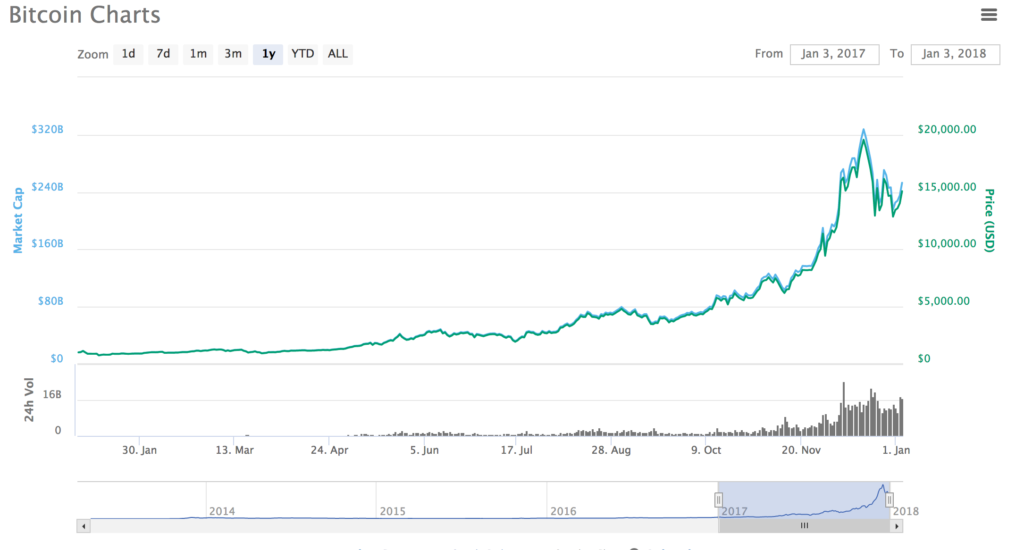
Crytpo Bubble Expands: Bitcoin had a year of growth to rival any financial bubble in history, at one point the rise was 20 fold in 12 months. I’ve been a believer in crypto currency for a long time. And I still am, but the underlying value of any product, service, asset class, or investment does not preclude it from getting overpriced (read bubble). The problem isn’t the price itself though, bitcoin could end up worth a million each for all i know, but that rapid adoption creates a rush at the door, and inevitably not everyone can get in or out – it creates a natural bottle neck of supply – the asset ends up with rapid confidence gains and losses, and sometimes it falls rapidly and doesn’t recover. Remember currencies are based on trust. My view is that bitcoin has shifted from a currency to a store of value – for now. So here’s the prediction bit. The crypto mania will continue into this year, and given those pushing up the price are generally people afraid of missing out, the rush will shift from being about bitcoin to about whichever currency ‘seems cheap’. It’s impossible to price an asset which has no yield and is based only on confidence and demand. Expect to see Ethereum, Ripple, Litecoin, Monero and others experience similar gains this year to bitcoin last year in a dotcom style boom. And just like that boom, a crash will happen, though I’m not sure when. The FOMO investors will exit, and crypto currency will re-emerge some years later and create the revolution it promised. Probably with some new coins, and some of the stalwarts. Side note: it took Amazon until 2007 before got back to  it’s year 2000 dotcom boom share price and now it’s on its way to be a trillion dollar company. The core skill we need in times like this is understanding if we are investing or speculating – both of which can be valid, so long as we know which game we’re playing. In the interim, we can expect to a serious shift of focus into the importance of the underpinning technology of the blockchain.

BlockChain technology pivot: Businesses will start to understand that blockchain technology can do much more than cryptographically track currency. It’s the equivalent of a 1989 internet era for blockchain, and the time is now to experiment with the technology and build something using it. The Google search you need to make is here: “How Blockchain technology can be used in [insert your industry]” – The more you dig into it, watch videos and understand the technology, you’ll see it has the potential to reframe the internet in many ways – and we need that to challenge the current internet oligopoly, and their quasi-unauthorised privacy trading market. A blockchain knowledge upgrade is a journey worth taking. I agree with Nic Hodges that we’ll see innovation on it this year outside of currency.

Regulation not a dirty word: People will start to realise that regulation is not the enemy, but an absolute requirement for a civilised and opportunity based capitalist economy. Here I’d like to make the delineation that there is good and bad regulation:

Bad regulations: Ones which protect industries and companies.

Good regulations: Ones which protect people.

It’s easy to forget that regulation can create entire industries and new revenue streams, open closed industries and allow for increased competition. Think work place health and safety – it not only made life better and safer for working people, but forced innovation in many realms. Opportunities to protect consumers against the big 4 are starting now – via regulation and via those prepared to innovate against their failings.

Virtual reality & Augmented Reality B2B pivot:  While the leaps being made in virtual and augmented reality are astounding and create incredible possibility, the big companies investing in the technologies (Microsoft / Facebook) will realise it will be many years before we have any serious adoption of these at the consumer level. Google’s move to warehouses and factories with Google Glass will be the start of these technologies infiltrating work as we know it. The beauty of this shift is it gives humans an upper hand against independent AI. We will become the technology and work with it. Expect to see people working in all areas from retail to manufacturing to distribution wearing various forms of facial augmented technology. We’ll also see the start of augmentation centres pop up – places we go to to get work done, or be entertained using high end AR & VR rigs – even Haptic Conferencing. Don’t expect to see it any time soon in anyones kitchen or lounge room. I believe this is the realm of ambient computing, and we should never forget a new technology needs a substitute, and I can’t see us substituting our current in home behaviour to don tech rigs at home. It will first need to infiltrate our worlds of work first – just like most technologies do. (Yes, we’ll still see VR / AR in basements with gamers!)

– – –

If you want to get your year off motivated and creating an independent future – check out my latest book, The Lessons School Forgot – I promise you’ll dig it. 

Have a great 2018, and go make something rad,

Steve.